AFTER HOURS.
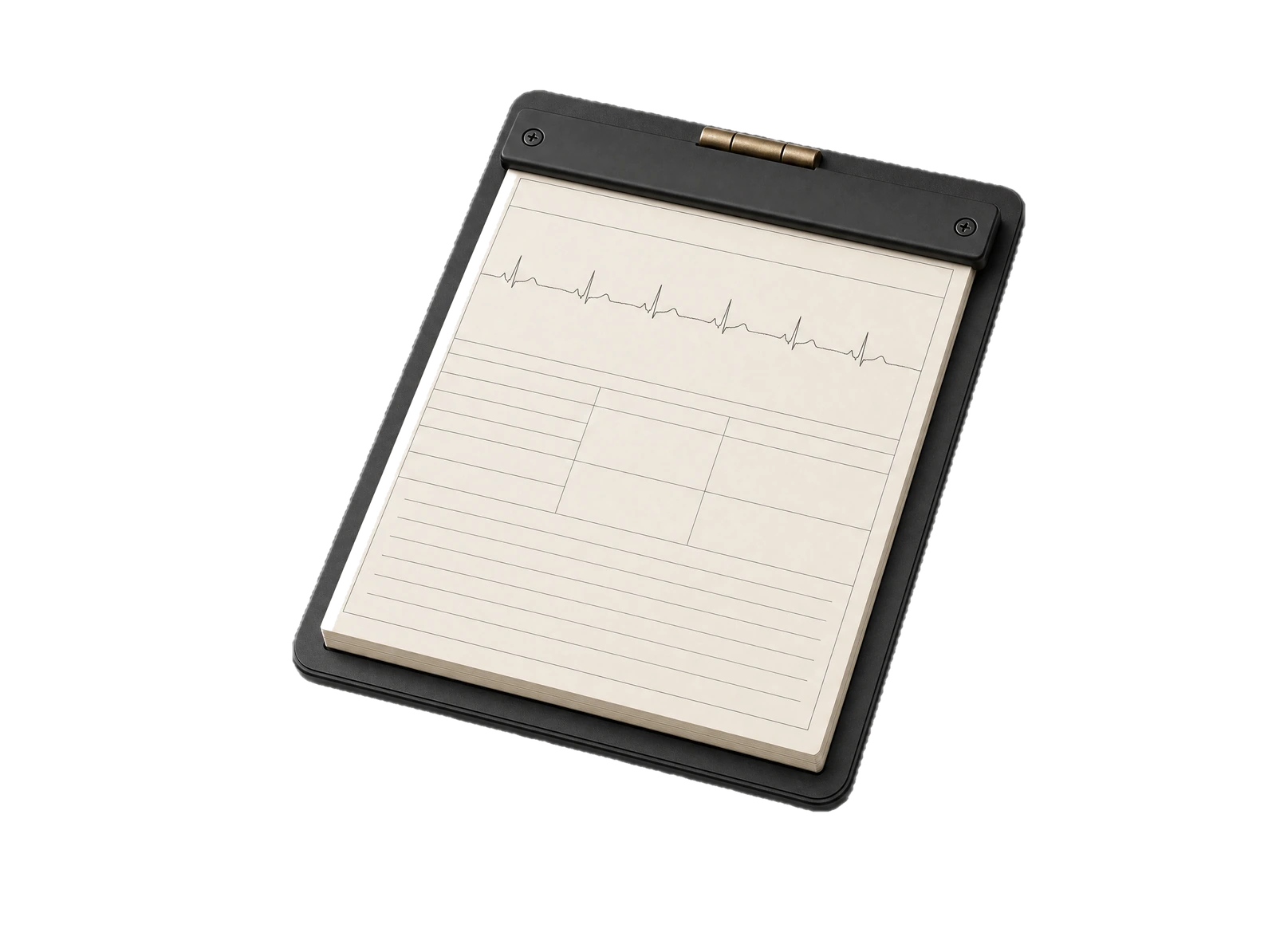
Physicians averaged 57.8 working hours a week in 2024. Nearly one in four spent more than eight hours a week in the EHR outside normal working hours, and the number increased.
FOR MEDICAL PRACTICES
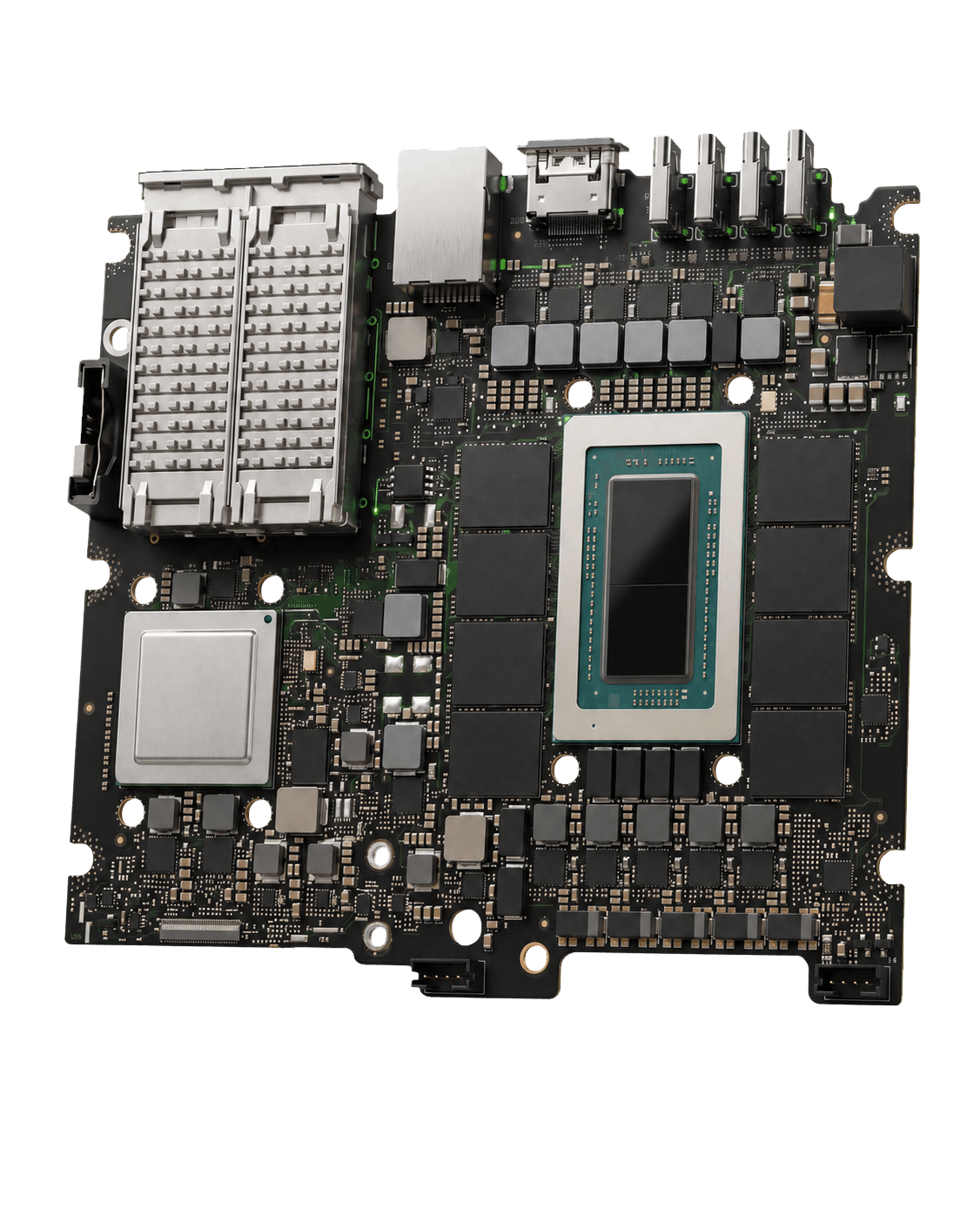
Draft notes, appeal denials, and summarize records on a machine inside the practice. The clinician reviews the work. No AI vendor holds the recording or chart.
01 / WHY LOCAL
PUBLIC CLOUD / EXTERNAL
Physicians averaged 57.8 working hours a week in 2024. Nearly one in four spent more than eight hours a week in the EHR outside normal working hours, and the number increased.
The AMA reports roughly 40 prior authorizations per physician every week and about 13 physician and staff hours spent completing them. Forty percent of practices assign staff to prior authorization alone.
HIPAA allows cloud services with the right business associate agreement and safeguards. Consumer accounts without those controls are different. A Node keeps the AI workload inside the practice instead of adding another PHI-holding vendor.
PRIMARY SOURCESAMA / PHYSICIAN HOURS AMA / PRIOR AUTHORIZATION HHS / CLOUD GUIDANCE AMA / 2026 AI SURVEY
02 / EXAMPLES
Clinic ended at five. The last two notes are still open on the kitchen table, where charting goes after the staff go home. In the AMA’s 2025 survey, 22.5 percent of physicians spend more than eight hours a week in the EHR outside working hours, and the number went up, not down.
With a Node in the office and a speech model installed, the visit recording becomes a draft note before the last patient leaves. The recording and chart stay on a machine the practice owns. The doctor edits, signs, and goes home. No vendor holds the recording.
A prior authorization comes back denied, the fourth this week. The AMA’s 2025 survey reports 40 prior authorizations per physician per week, 13 staff hours spent completing them, and 40 percent of practices with a staff member working on nothing else.
The machine reads the denial and the chart excerpt and drafts the appeal letter while the front desk answers the phone.
In the AMA’s 2026 survey, 81 percent of physicians used AI professionally and 86 percent called data privacy critical to adoption. The demand already exists. The practice needs a tool it can govern.
03 / WHAT YOU GET
A sealed machine on your own network, configured and maintained by Splay inside your practice. Staff use it to draft visit notes from recordings, letters, and summaries, write the small tools nobody budgets for, and search every policy, chart, and record you could never upload.
It needs no cloud account and no internet connection, and nobody pays per seat. We maintain the machine without ever holding your files. The whole setup is written down, step by step; any competent IT shop could run it without us.
04 / WHAT IT DOES
A Node runs an AI model inside your building. Staff use it to draft documents, build small tools, and search files that cannot go to a public service.
Staff describe a small tool in plain English. The Node writes the code, and the tool runs on your network.
Intranet pages, forms, and working dashboards built from a plain description.
Proposals, compliance matrices, SOPs, contract reviews, letters, and summaries in your templates.
A vision model can read scanned drawings and photos of parts.
Every Node supports the same types of work. Larger machines handle more users, larger models, or faster answers. The pilot lets you test one with your own work.
05 / THE MACHINES
Five standard machines and one custom build. Each runs on your network with no path to the internet. Hardware, capacity, and prices are listed on every card.
If the listed machines do not fit your workload, Splay can build one to order. Memory, speed, and models are set after a call and quoted in writing.
NODE 01 serves 1-15 staff.
A second Spark and one cable turn NODE 01 into NODE 02.
Two more make NODE 03. Nothing is replaced or migrated.
What you paid counts in full from NODE 01 through NODE 03.
NODE 03 is built for more users. NODE 04 is built for faster answers. NODE 04 uses four RTX PRO 6000 cards, each with 1,792 GB/s of memory bandwidth. One Spark has 273 GB/s. Both can run GLM-5.2.
The practice places one order. There are no usage charges or per-seat fees. Spark machines upgrade by joining, and what you paid credits in full from NODE 01 through 03. Credits toward NODE 04 and 09 are set by quote.
MODEL LEDGER / JULY 2026
Published open models against the machines. The verdict is arithmetic over each model's published size and each machine's installed memory, nothing else. The flag is the developer's home country.
The estimate covers the model itself plus 5% overhead; working memory is extra. Sizes are the published figures.
Model score: best closed model = 100 on the Artificial Analysis index, July 2026. Raw scores 38, 40, 51, 44, 51 against the best closed model's 60. Model fit includes 5% overhead; working memory is extra. NODE 04 and 09 are built to order: 50% deposit, quotes hold 30 days. Prices subject to change.
06 / COST
Public tools remain fine for work with no PHI in it. Cloud clinical AI pricing is Freed's published plans, $39 to $119 a clinician a month; the larger scribe vendors quote. Hardware alone does not make you HIPAA compliant.
07 / PRICING
These are Splay's current published prices.
A sealed enclave built inside your practice: its own walled-off network, a bay for your Node, screens that can view but never copy, and a documentation pack for your risk analysis.
$25,000 TO 10 SEATS$45,000 TO 25 SEATSFixed price; the machine is priced separately. You own it, and your IT runs it with our manual.
* Credited in full against any machine. Courses use your own examples. Custom models are tuned on your hardware. Extra on-site work is $2,400 a day.
Model drop: each quarter's best open model, installed and briefed on-site. Included with NODE 04/09 care. AI officer: a standing operator for prompts, workflows, and small tools.
08 / FROM CALL TO INSTALL
A 20-minute call about your network, staff, and work.
A readiness survey at your facility. $2,400, credited in full against any machine.
A pilot machine on your bench for 30 days. $2,000, credited in full. Then you decide.
A fleet of four pilot machines exists. Every machine is a copy of one documented setup, with a step-by-step manual; any competent IT shop could run it without us.
09 / FAQ
No. Staff work with exports, scans, and recordings. There is no vendor connection into your EHR. If you want an AI tool built into the EHR, that is a different product. A Node handles work outside it: notes, letters, appeals, summaries, and searches.
With a speech model installed, it drafts a visit note from a recording, and the recording never leaves the machine. Dedicated scribe services are more polished at that single job. A Node keeps the work inside your practice and also handles the other tasks listed on this page.
No, and no machine does. What changes: this work stops leaving the building, so there is no new vendor holding PHI and no new business associate agreement behind it. The clean room engagement includes a documentation pack for your risk analysis.
HHS proposed a stricter Security Rule in January 2025: mandatory risk analysis, encryption, MFA, and asset inventories. It is not final. The rules in force today already require a risk analysis, and recent OCR settlements cite that requirement. Your documentation can state that the AI machine runs inside the practice and sends no data out.
Yes. Staff describe a tool in plain English and the machine writes the code. It works best for small internal tools and scripts. Large production systems still need a software team. The pilot lets you test it with your own work.
Your IT does, with our manual. Every machine is a copy of one documented setup. If you would rather we watch it, managed care starts at $600 a month and year one is included with every machine.
You own the machine outright, and the whole setup is written down, step by step. Any competent IT shop could run it without us.
A pilot machine sits on your bench for 30 days for $2,000, credited in full against any machine. So is the $2,400 readiness survey.
$0. The machine is the cost. NODE 01 serves 1 to 15 staff; when you outgrow a machine you buy the next machine, not the next license.
Each person uses the Node over your network. What limits a machine is how many answers it writes at the same time. NODE 01 is bench-measured at ten simultaneous conversations. Larger machines serve more people, and Splay sets the working memory during installation so the machine stays responsive.
You add machines. A second Spark turns NODE 01 into NODE 02; four Sparks make NODE 03. What you paid is credited in full from NODE 01 through NODE 03. Credits toward NODE 04 and NODE 09 are set by quote.
No. The machine has no path out to the internet, and your files stay in your building. Custom models are tuned and tested on your hardware, and support visits happen on-site, at the rate on the card.
So buyers can compare the machines before a call. Model scores come from a public index, and the raw scores are printed on the page. Every price carries its edition date: July 22, 2026.
10 / CONTACT
Splay is based in Stafford, Virginia, and installs on site across Northern Virginia—including Arlington, Alexandria, Fairfax, Loudoun, and Prince William—and Washington, DC. Start with a 20-minute call.